What is Bilona Ghee? The Traditional Vedic Method, Explained
You have seen “Bilona ghee” on labels and heard it described as the traditional way to make ghee. This guide breaks down exactly what the Bilona method is, how it differs from ordinary ghee, and why Shabla makes its A2 Gir Cow Ghee this way — from pure Gir cow milk, hand-churned, the way it has been done for generations.
What is Bilona ghee?
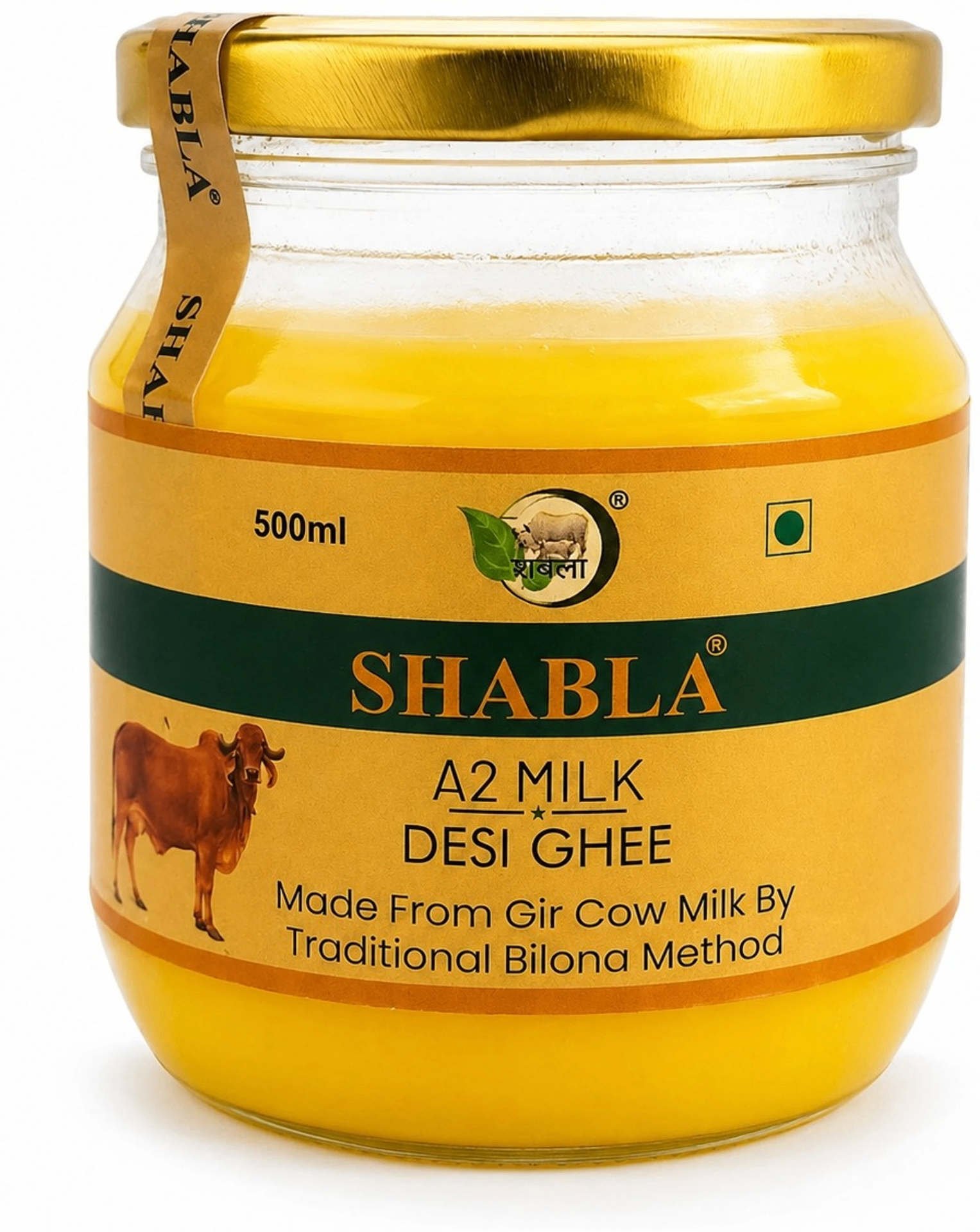
Bilona ghee is ghee made the way Indian households have made it for centuries. The name comes from the bilona — a wooden hand churner used to turn curd into butter. Instead of skimming cream off milk and heating it straight away, the Bilona method takes the longer route: milk is set into curd, the curd is hand-churned to draw out butter (called makhan), and that butter is then slow-simmered until it turns into golden ghee.
This is the method described in traditional Indian texts and followed in homes across the country. It is slower and more labour-intensive than the modern industrial process, but that is precisely the point — the extra steps are what give Bilona ghee its aroma, granular texture and the qualities it is prized for.
The traditional Bilona method, step by step
Here is how Shabla approaches each batch of A2 Gir Cow Ghee, staying true to the Vedic Bilona process:
- 1
Milk from native Gir cows
We start with fresh milk from native Gir cows. Gir is an indigenous Indian breed whose milk carries the A2 beta-casein protein, the milk traditional ghee has always been made from.
- 2
Set the curd
The milk is boiled, cooled and set into curd using a natural starter. This fermentation step is unique to the Bilona method — most modern ghee skips it entirely. It is what develops the characteristic flavour.
- 3
Hand-churn with the bilona
The set curd is churned by hand using the wooden bilona. Slow, rhythmic churning separates the butter (makhan) from the buttermilk. This is the heart of the Bilona method — no machines, no shortcuts.
- 4
Collect the makhan
The butter that rises is gently collected. Only this butter — not cream, not milk — goes on to become ghee.
- 5
Slow-simmer into ghee
The makhan is simmered on a slow flame until the moisture evaporates and the milk solids separate. What remains is strained into clear, golden ghee with a rich aroma and a grainy texture once it sets.
Why A2 Gir cow milk?
Gir is one of India’s native cow breeds, raised for centuries in the country’s western and central regions. Its milk naturally carries the A2 beta-casein protein rather than the A1 variant found in the milk of many commercial breeds. Traditional Bilona ghee has always been made from indigenous breed milk like this, which is why Shabla sources from native Gir cows rather than crossbred herds.
Using native breed milk also honours the spirit of the method: the same breed, the same curd-and-churn steps, the same slow simmer that Indian homes have relied on for generations.
Nutritional advantages of Bilona ghee
Because Bilona ghee is made from butter drawn out of cultured curd — not cream skimmed straight from milk — traditional makers credit the method with retaining more of ghee’s natural qualities. Here is what is generally known about ghee made the traditional way:
- ✓
Fat-soluble vitamins. Ghee is a source of vitamins A, D, E and K, which the body absorbs along with fat.
- ✓
Conjugated linoleic acid (CLA). Ghee from pasture-fed native cows contains CLA, a naturally occurring fatty acid.
- ✓
Butyric acid. Ghee contains butyric acid, a short-chain fatty acid also produced naturally in the gut.
- ✓
High smoke point. Ghee handles high cooking temperatures well, which is why it is widely used for Indian cooking, tadka and frying.
- ✓
Lactose & casein. Because the milk solids are removed during clarifying, ghee is essentially free of lactose and casein.
Note: This is general information about ghee, not medical advice. If you have a specific health condition or dietary need, please consult a qualified professional.
Bilona method vs. the cream method
| Aspect | Bilona method | Cream (industrial) method |
|---|---|---|
| Starting point | Curd set from milk | Cream skimmed from milk |
| Fermentation | Yes — curd is cultured first | No |
| Churning | Hand-churned with a bilona | Mechanically separated |
| Made from | Butter (makhan) from curd | Cream heated directly |
| Texture | Granular, aromatic | Smoother, milder |
How to use and store Bilona ghee
Bilona ghee is as versatile as any ghee, with a richer aroma that comes through in everyday cooking:
- • A spoonful over hot rotis, rice or dal for aroma and richness.
- • For tadka (tempering) spices in curries and sambhar.
- • A teaspoon stirred into warm milk — a classic Indian home remedy.
- • For roasting and high-heat cooking, thanks to its high smoke point.
Storage: Keep ghee in a clean, dry jar away from direct sunlight. Use a dry spoon — no moisture — and it will keep well at room temperature for months. It does not need refrigeration.
Bilona ghee FAQ
What is Bilona ghee?+
Bilona ghee is ghee made the traditional Vedic way: A2 Gir cow milk is set into curd, the curd is hand-churned with a wooden churner (bilona) to draw out butter, and the butter is slow-simmered into golden ghee. The curd-and-churn steps set it apart from the modern cream method.
How is Bilona ghee different from regular ghee?+
Regular ghee is usually made by separating cream from milk and heating it directly. Bilona ghee ferments the milk into curd first, then hand-churns it into butter. That extra fermentation step is what traditional makers credit for the ghee’s aroma, granular texture and character.
Why is A2 Gir cow milk used?+
Gir is a native Indian breed whose milk carries the A2 beta-casein protein. Traditional Bilona ghee has always been made from indigenous breed milk like this, so Shabla sources from native Gir cows to stay true to the method.
How should I store Bilona ghee?+
Store it in a clean, dry jar away from sunlight and always use a dry spoon. Kept moisture-free, Bilona ghee stays good at room temperature for months and does not need refrigeration.
Try Shabla A2 Gir Cow Ghee
Made the traditional Bilona way from pure native Gir cow milk — hand-churned, slow-simmered, and delivered across India.
Have a question about Bilona ghee? Email namaste@shabla.in or message us on WhatsApp at +91 90268 02802.